



Chevy Express Cargo 2500 vs 3500: What’s the Difference? [2026]
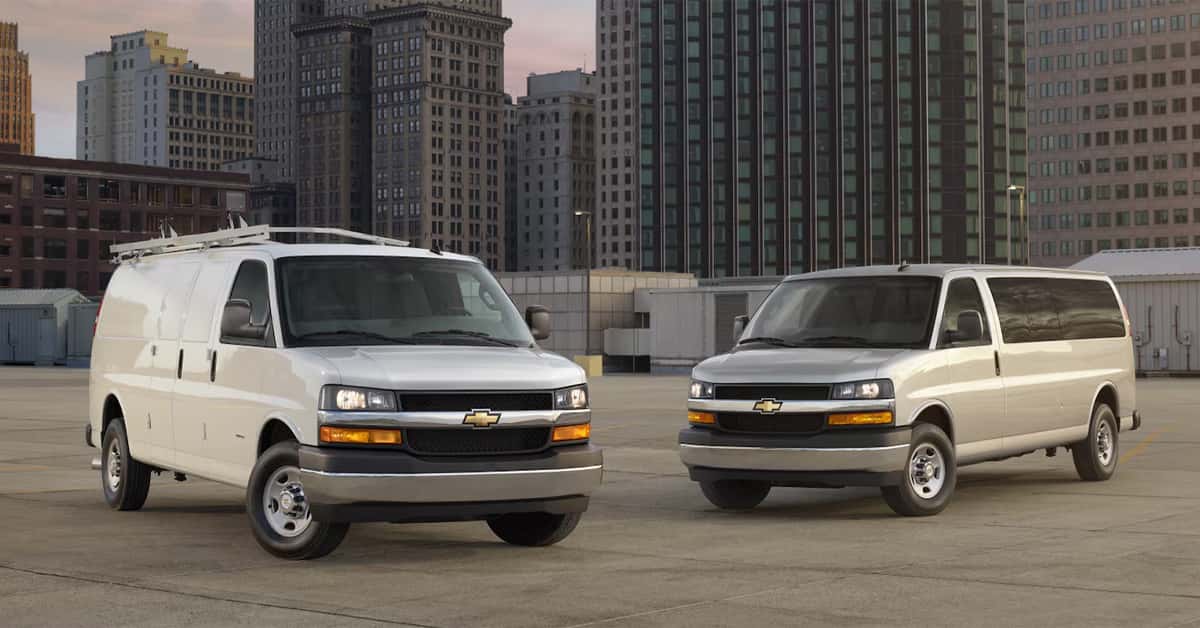
Choosing between the Chevy Express Cargo 2500 and 3500 comes down to understanding payload, towing, and cargo capacity. The 2500 offers nimble handling and efficiency for lighter loads, while the 3500 provides higher durability, a full-floating rear axle, and greater payload for heavy-duty work.
From engine options to interior space and safety features, knowing the differences between these vans helps businesses optimize performance, protect equipment, and make the right investment for their daily operations.
At Joseph Chevrolet, we are here to help drivers in Cincinnati, Colerain, Hamilton, and Dayton find the right vehicle for their needs. Our team can assist with sales, service, parts, and financing, making it easy to explore the full lineup of Chevy Express Cargo vans.
Contact us today or visit our dealership to see the 2500 and 3500 in person and find the right fit for your business.
What Are the Key Differences Between the Express Cargo 2500 and 3500?
When comparing the Chevy Express Cargo 2500 vs 3500, the most noticeable differences come down to payload capacity, chassis strength, and intended use. While both vans are built for reliability and heavy-duty performance, each model serves a slightly different purpose for local businesses in Cincinnati, Colerain, Hamilton, and Dayton.
Understanding these distinctions ensures the right choice for your daily operations, whether you’re delivering goods, transporting equipment, or running a fleet.
Payload and Weight Ratings
One of the biggest distinctions is payload capacity.
- Express Cargo 2500: Maximum payload of 3,280 pounds with a GVWR of 8,600 pounds. Ideal for lighter loads, daily deliveries, or small fleets.
- Express Cargo 3500: Maximum payload of 4,280 pounds with a GVWR of 9,900 pounds. Built for heavy-duty work, frequent hauling, and larger loads.
This 1,000-pound difference makes the 3500 a better option for contractors, landscapers, or delivery services that routinely carry heavy materials. For businesses handling lighter cargo, the 2500 provides easier maneuverability and efficiency.
Chassis and Axle Design
The rear axle design also sets these vans apart:
- Express Cargo 2500: Semi-floating rear axle, which is sufficient for lighter work but experiences more stress under full payloads.
- Express Cargo 3500: Full-floating rear axle, designed to support heavy loads without overstressing the axle shafts, improving long-term durability.
Additional suspension and braking enhancements on the 3500 provide stability when fully loaded, making it ideal for longer trips or highway driving.
Towing and Hauling
Both models can tow up to 10,000 pounds, but the 3500’s reinforced chassis and rear axle deliver more confidence when towing near full payloads. Whether hauling trailers, large equipment, or recreational vehicles, the 3500 provides smoother handling and added safety on the road.
Choosing the right model depends on your typical workload. The 2500 is efficient and practical for everyday deliveries and smaller cargo, while the 3500 handles heavy-duty tasks without compromise.
For local businesses ready to explore both vans, scheduling a hands-on look at the Express Cargo 2500 and 3500 at Joseph Chevrolet is the best way to see which model fits your needs.
How Do Payload and Towing Capacities Affect Daily Business Use?
Understanding the Express 2500 3500 cargo difference is essential for businesses that rely on vans for day-to-day operations. Payload and towing capacities directly influence how efficiently materials, equipment, or passengers can be transported without overloading the vehicle.
Selecting the right van ensures safety, reduces wear and tear, and keeps deliveries or projects on schedule.
Payload Considerations
Payload capacity determines how much weight a van can carry in addition to its own equipment and passengers.
- Express Cargo 2500: Supports up to 3,280 pounds. Best for lighter materials, small delivery runs, or service calls where full cargo weight is rarely reached.
- Express Cargo 3500: Supports up to 4,280 pounds. Handles heavier tools, bulk shipments, or densely packed deliveries without straining the chassis.
For companies moving heavy machinery, appliances, or construction materials around Cincinnati or Hamilton, choosing the 3500 ensures the van operates safely and maintains performance over time. The 2500, meanwhile, offers efficiency and easier handling in urban settings like Colerain or Dayton.
Towing Capabilities
While both models can tow up to 10,000 pounds, the way the van handles trailers differs:
- Express Cargo 2500: Suitable for moderate trailer use or occasional hauling. A semi-floating rear axle may experience more stress under maximum load.
- Express Cargo 3500: Full-floating rear axle improves stability, making it better for heavy trailers or frequent towing on highways and longer routes.
For businesses with service trailers, landscape equipment, or delivery trailers, these differences can reduce driver fatigue and improve overall safety.
Matching Vehicle to Business Needs
When planning daily operations, consider:
- Frequency of maximum loads – Regularly hauling near the top of a van’s capacity favors the 3500.
- Type of cargo – Lighter, smaller shipments often perform efficiently in the 2500.
- Route conditions – City streets favor nimble 2500 vans, while heavy loads over highways or rural routes suit the 3500.
Choosing the correct payload and towing combination ensures your team can complete jobs safely and on time. Schedule a visit at Joseph Chevrolet to see both the Express Cargo 2500 and 3500 in action and find the model that aligns with your business demands.
What Mechanical and Chassis Differences Should You Know?
When comparing Chevy Express Cargo vans, understanding the mechanical and chassis distinctions between the Express Cargo 2500 and 3500 is critical for business owners. These differences influence durability, ride quality, and how each van handles full loads or towing tasks.
A side-by-side look at the chassis setup can help determine which model is better suited for your daily operations.
Rear Axle Design
The rear axle configuration is one of the most important factors for load-bearing and stability:
- Express Cargo 2500: Uses a semi-floating rear axle, which supports moderate cargo and trailer loads efficiently. It is ideal for lighter-duty applications, urban deliveries, and smaller work crews.
- Express Cargo 3500: Features a full-floating rear axle. This setup protects the axle shafts under heavier loads, improving long-term durability and reliability for frequent or full-capacity hauling.
Businesses that transport dense equipment, large shipments, or multiple passengers benefit from the 3500’s reinforced axle, especially on longer trips between Cincinnati, Colerain, or Dayton.
Suspension and Braking
Suspension and brakes are engineered to complement each van’s payload:
- Express Cargo 2500: Standard springs and braking components handle everyday loads and moderate towing efficiently.
- Express Cargo 3500: Equipped with heavier-duty springs and larger brakes, delivering added stability and stopping power when carrying maximum payloads or towing trailers.
This makes a significant difference for contractors, delivery services, and fleet operators who rely on predictable handling under pressure.
Wheelbase and Cargo Flexibility
Both models offer standard and extended wheelbase options:
- Standard: 135 inches, suitable for tighter city streets or parking areas.
- Extended: 155 inches, providing more cargo room and supporting configurations up to 15 passengers on the 3500.
Longer wheelbases improve interior space for shelving, partitions, or bulk deliveries, and are especially useful for shuttle services, trade crews, or businesses with flexible cargo needs.
Understanding these mechanical and chassis differences in the Chevy Express Cargo comparison 2026 ensures your team selects a van that can handle real-world demands safely and efficiently. Stop by Joseph Chevrolet to examine both the Express Cargo 2500 and 3500, test the handling, and see firsthand how each configuration supports your business requirements.
Which Engine and Performance Options Deliver the Right Power?
Choosing the right engine can make a huge difference in daily operations, especially when hauling heavy loads or towing trailers.
Understanding the 2500 vs 3500 cargo van capacity helps determine which powertrain is best suited for your business needs, whether you’re running deliveries across Cincinnati, transporting construction materials in Colerain, or managing fleet operations in Dayton.
Engine Options
Both the Express Cargo 2500 and Express Cargo 3500 offer the same powertrain choices for 2026, allowing businesses to match performance to workload:
- 4.3L V6: Produces 276 horsepower and 298 lb-ft of torque. Efficient for lighter loads, smaller deliveries, or urban routes where fuel economy matters.
- 6.6L V8: Produces 401 horsepower and 464 lb-ft of torque. Ideal for heavier cargo, towing trailers, or operating under full payload regularly.
The V6 engine pairs well with the 2500 for everyday tasks, while the V8 ensures the 3500 handles maximum payloads or extended trips with confidence.
Transmission and Drive
Both engines are paired with an 8-speed automatic transmission, delivering smooth shifts whether navigating tight city streets or highway drives. Rear-wheel drive is standard, and four-wheel-drive options are available for businesses operating on rugged job sites or inclement weather conditions.
Performance Considerations for Daily Use
- Express Cargo 2500: Best for moderate loads and frequent stop-and-go deliveries. Its lighter capacity allows for improved fuel economy and maneuverability.
- Express Cargo 3500: Handles higher payloads and dual rear wheel configurations, providing added stability for heavy-duty hauling or towing. This makes it the preferred choice for contractors, shuttle services, and fleet operators managing larger loads.
Matching engine and performance to your cargo and towing requirements ensures each trip is safer, more efficient, and less stressful for drivers. Visit Joseph Chevrolet to explore both the Express Cargo 2500 and 3500, take each engine for a test drive, and see which setup delivers the right combination of power and efficiency for your business.
How Does Cargo Space and Interior Configuration Impact Operations?
Selecting the right van for your business goes beyond engine power and payload. Understanding the Chevy Express, which cargo model fits your workflow, can save time, improve safety, and streamline operations across Cincinnati, Dayton, Colerain, and Hamilton.
Cargo space, seating layout, and interior configuration all play a role in how efficiently your team can load, unload, and organize materials.
Cargo Volume and Layout
- Express Cargo 2500: Offers ample floor space for medium-duty loads, with flexibility for shelving, racks, or partitions. Ideal for smaller deliveries or tool-heavy trades.
- Express Cargo 3500: Provides additional payload support and can accommodate heavier equipment layouts. The extended wheelbase improves overall cargo volume, making it suitable for larger shipments or fleet operations.
Optimizing cargo layout can reduce trips, prevent damage to tools and materials, and improve access when on tight delivery schedules or busy job sites.
Seating and Passenger Configurations
- Express Cargo 2500: Supports up to 12 passengers in passenger configurations, balancing cargo space with team transport.
- Express Cargo 3500: Expands seating capacity to 15, making it ideal for shuttle services, multi-person crews, or businesses that need both cargo and passenger flexibility.
Customizing interior space with modular shelving or partitions allows businesses to adapt each van to their unique operational needs.
Operational Efficiency
Choosing the right cargo model affects how smoothly daily operations run. A 2500 van may excel in city routes with tight parking, while a 3500 van handles heavy loads or multiple trips with greater durability. Properly configured interiors reduce wasted time, improve worker safety, and ensure deliveries or services are completed efficiently.
Explore the Express Cargo 2500 and Express Cargo 3500 at Joseph Chevrolet to see firsthand how different layouts and cargo setups can fit your business. Our team can help you determine which model offers the right combination of space, capacity, and accessibility for your specific operations.
Frequently Asked Questions
| Question | Answer |
| What is the payload capacity difference between the Express Cargo 2500 and 3500? | The 2500 carries up to 3,280 lbs, while the 3500 handles 4,280 lbs. |
| How much cargo space does the Express Cargo 2500 vs 3500 offer? | Both vans have similar interior dimensions, but the 3500 supports heavier loads and larger shelving setups. |
| Does the Express Cargo 3500 have a higher roof option than the 2500? | No, both models share the same roof height options for 2026. |
| Which has better hauling capability: the 2500 or 3500 Cargo? | The 3500, with its full-floating rear axle, provides superior capacity and durability for heavy loads. |
| Is the Express Cargo 3500 available with dual rear wheels? | Yes, dual rear wheel configurations are available on select 3500 models for extra stability. |
| What’s the GVWR difference between the 2500 and 3500 Cargo models? | The 2500 GVWR is 8,600 lbs; the 3500 GVWR is 9,900 lbs. |
| Which is better for contractors and tradespeople: 2500 or 3500? | For lighter daily tasks, 2500 is sufficient; for heavy-duty hauling or large tools, 3500 is recommended. |
| Are there different wheelbase options for the Express Cargo 2500 vs 3500? | Both models offer 135-inch standard and 155-inch extended wheelbases. |
| Does the Express Cargo 3500 cost significantly more than the 2500? | Yes, the starting MSRP for the 3500 is around $57,910, compared to $47,420 for the 2500. |
| Which model is better for delivery services and fleet use? | The 2500 is ideal for smaller loads and urban streets, while the 3500 suits heavier deliveries and high-frequency routes. |
Explore Chevy Express Options and Local Services
For businesses and drivers in Cincinnati, Colerain, Hamilton, and Dayton, choosing the right cargo van goes beyond payload and towing. Our dealership offers a wide selection of Express Cargo 2500 and Express Cargo 3500 models so you can see firsthand how each configuration fits your daily operations. Whether you manage deliveries, trades work, or fleet logistics, understanding the differences between models helps you make smarter, more efficient choices.
If you want a broader perspective on Chevy Express options, our guide on Chevy Express Passenger 2500 vs 3500 highlights how passenger and cargo configurations meet different needs, while Chevy Express Passenger vs Cargo vs Cutaway explores which body style fits specific business requirements. You can also learn why servicing your vehicle at a dealership keeps it performing reliably with professional maintenance, expert diagnostics, and OEM parts.
Contact Joseph Chevrolet today to explore our full inventory of 2026 Express Cargo vans, schedule a test drive, or get personalized guidance on choosing the right model for your business. Our team is ready to assist with every step, from sales to service and finance application, ensuring drivers across the Cincinnati area get the van that works best for their operations.
Get Directions to Joseph Chevrolet
Disclaimer: All information is provided for general informational and entertainment purposes only. While we strive for accuracy, we cannot guarantee that all content is complete, current, or error-free. Any reliance you place on such information is strictly at your own risk. This article may include opinions and is not endorsed by, or officially affiliated with, any vehicle manufacturer or brand. Always consult official sources – such as the vehicle’s owner’s manual, authorized dealerships, or certified professionals – for the most up-to-date and personalized information.
0 comment(s) so far on Chevy Express Cargo 2500 vs 3500: What’s the Difference? [2026]